A podcast on theories of consciousness
The Explanatory Gap
Long conversations with the researchers behind today's competing theories of mind, and a recurring question for each: how does your theory handle the gap between physical processes and felt experience?
Pilot season in development. Episodes coming soon.
The question
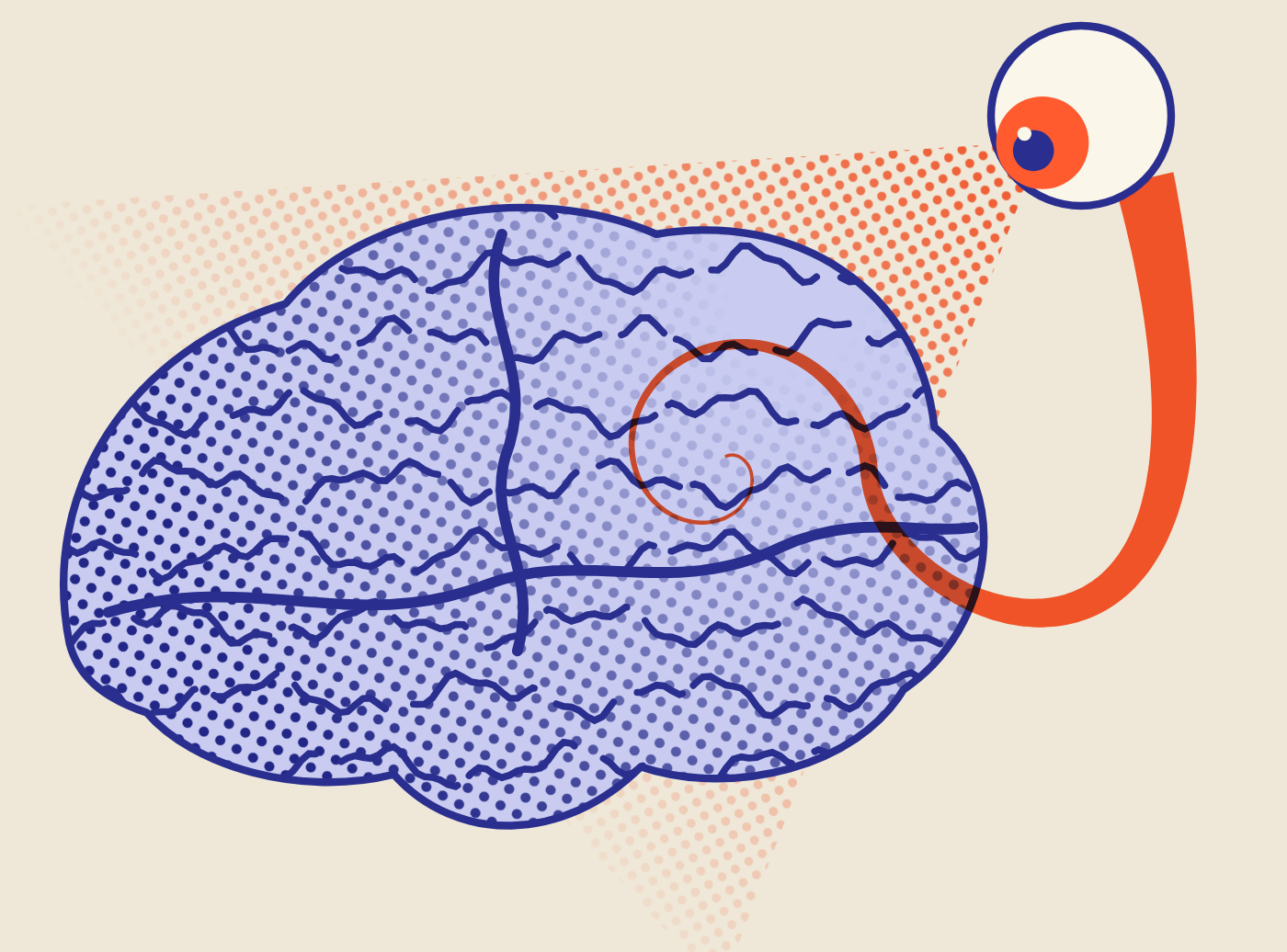
We can map what the brain does. We can't yet say why it feels like anything.
We live in an era when individual neurons can be probed, contemplative practices can be studied across the world, and language models can convincingly imitate thought. Yet the oldest question about the mind is still open: why does any of that processing come with an inner life at all? The philosopher Joseph Levine named this the explanatory gap: the distance between a complete physical account and the fact of experience.
Every serious theory of consciousness is, in effect, a proposal for what to do about that gap. Close it, dissolve it, or move the ground it stands on. This show puts those proposals side by side, in the voices of the people who hold them.
The show has two goals. The first is an archive: a record of the many different explanations of consciousness that exist today. The second, and the more important, is to shine a light into the dark and learn what we don't yet know. I don't expect a single answer, and I don't expect any of the answers we find to be entirely satisfying.
The format
One theory. One guest. One recurring question.
The theory, in the guest's own words
Your guest lays out their view from the ground up, without a textbook's simplifications.
How does it handle the gap?
Every episode returns to the same question: does the theory close the gap, dissolve it, or sidestep it?
The strongest objections
I press on the hardest criticisms of the theory, starting from the guest's own published work.
What would change your mind?
Each conversation ends by asking what evidence would lead the guest to revise or abandon the theory.
The approach
Science first, across every field that has something to say.
Rather than focusing on one field, the show moves across many, with the aim of bridging the gaps between them. Neuroscientists, psychologists, and AI researchers anchor the conversations, because science and its methods are the cornerstone of the show. But science alone doesn't seem to supply every answer or every perspective worth hearing, so, through that same scientific lens, the show also explores the ideas of philosophers, psychonauts, and meditative practitioners.
The technical details stay in. I won't be a specialist in most of the fields we cover, so I'll do the work to understand each idea well enough to draw out a clear explanation, one you can follow as it's built.
The terrain
A first map of the territory
These are the families of ideas the show is built to cover. The map will shift as the conversations do.
Integrated information theory
Consciousness as the irreducible causal structure of a physical system.
Global workspace theory
Consciousness as information broadcast across the brain for flexible use.
Predictive processing and active inference
The brain as a prediction engine, and experience as a form of inference.
Higher-order theories
A state is conscious when the mind represents itself as being in it.
Panpsychism and related views
Experience as a basic feature of the world rather than something that emerges late.
Illusionism
The puzzle itself rests on a systematic mistake in how the mind models itself.
Contemplative and psychedelic science
First-person evidence from meditation and altered states, taken seriously as data.
Machine consciousness
What, if anything, would count as evidence of experience in an artificial system.
Your host
Hi, I'm Eli.
I'm an independent researcher affiliated with Colorado State University, where I'm pursuing a BS in psychology. My work spans computational neuroscience and AI interpretability, and I spend most of my time on how learning systems, biological and artificial, come to represent the world.
I started this show because I wanted more long, careful conversations about the nature of minds, and I suspect other people do too. Neuroscience, AI, and a renewed scientific interest in contemplative and psychedelic experience are all converging on the same old question at once. It seems worth documenting.
Be a guest
If you work on a theory of consciousness, or on the questions around it, from neuroscience and AI to contemplative and psychedelic research, I'd like to hear from you.